A Note on Video Quality
The Videos Look Bad
So, what's up with that?
Before anyone goes all full-on hater on the video quality (or lack thereof) and summarily dismisses it for that reason alone, I need to take just a quick minute to explain a couple things.
Basically, this website is like digging through an ancient archeological site.

Even though it's kind of hard to tell that these little shards of pottery were once a beautiful goblets, it's still fun to see them (at least for some people it is).
And that's what we have here.
Video Resolution
Before the days of HD and 4k, we all had SD (Standard Definition).
(Which was a lot like Rocky I before there was a Rocky II -
we didn't even know it was a "
SD was (mostly) 640x480 pixels and was originally designed to approximate the resolution you'd get on a standard, old-school, tube television.
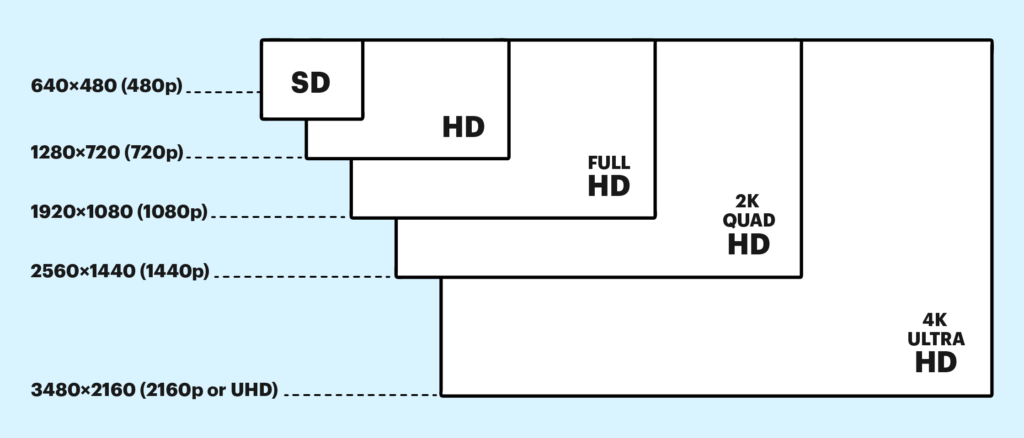
The first consumer HD video cameras didn't show up on the scene until the early 2000's.
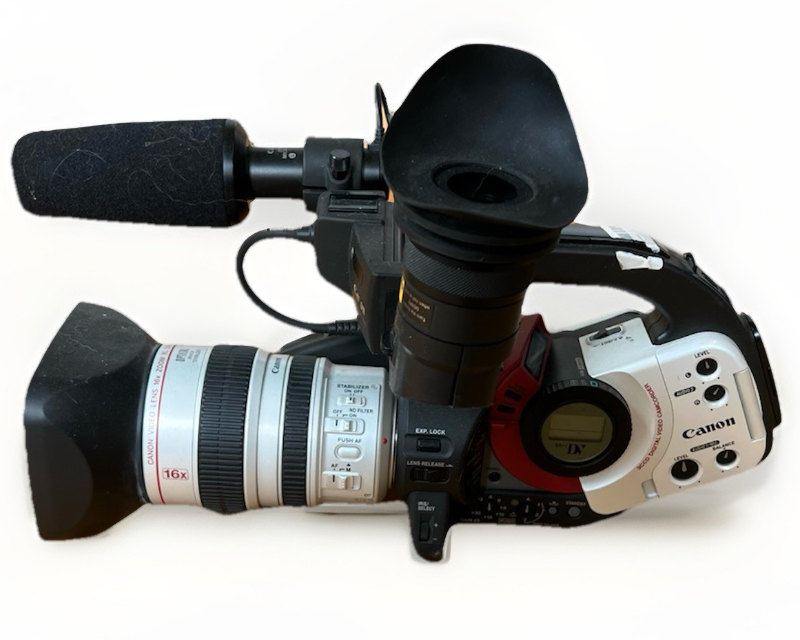
So just about everything on this site was shot at SD resolution on a high-end Canon XL1 camera.
(This camera cost over $4 grand in 1998!)
So Why Not Upscale?
Good idea, but it doesn't work on these videos.
Video files were far too big for computers and hard drives to deal with back then so they had to be highly (highly) compressed. (and "compressed" is just another word for severe-reduction-in-quality!)
In a day when video compression technology was not, let's say, as advanced as it's become today. It was more of an evolving experiment in how bad you could make the video look while keeping it from filling up your $1,000 media-ready hard drive.
So, even though the resolution of the files was low to begin with, the actual video quality made it seem even worse than that.
I even tried some of the newer (2025) AI tools for video upscaling and the results were not impressive (at all). Which was not really surprising since there's just not enough information in the files to begin with.
It just kind of is-what-it-is.
Challenges That Don't Exist Today
-
Most hard drives were too slow to stream video for editing.
- You had to use very expensive SCSI hard drives. And in order to get enough space to do anything usable, you had to stack several of them into an expensive external drive tower!
-
There was no "Magic Bullet" operating system.
- They all had issues. I went through a period of time where I was literally installing a different OS every single weekend. Across the board they all had advantages and disadvantages. (but mostly disadvantage!)
-
Limited choice of CODECs.
- The CODEC was the little plug-in for the OS that compressed and decompressed the video. And back then, there were really no standards and everyone was vying for the lead position.
-
Limited choice of file types.
- Again, no standard and everyone was tyring to be "the guy" you should pick, AVI, MOV, MPEG-1, DV, DivX. Due to software and hardware limitations, we ended up capturing, editing and delivering in--the now primitive--MPEG-1 file format.
-
Few video editing software choices.
- Editing software is one of the things we take for granted today, since everyone can shoot and edit video on their phone! But in 1998, that was not the case. Back then there was no vibrant ecosystem of video production software. There were a lot of proprietary choices tied to hardware capture cards.
-
Cost.
- And everything you touched cost a bunch of money! From the cameras to the workstation-level computers to the media ready hard drives to the actual video capture cards. In 1998, if you wanted to edit video, you had to be prepared to pony up some dough!