Attic Studio (pt1)
 Left-Brain
At Work
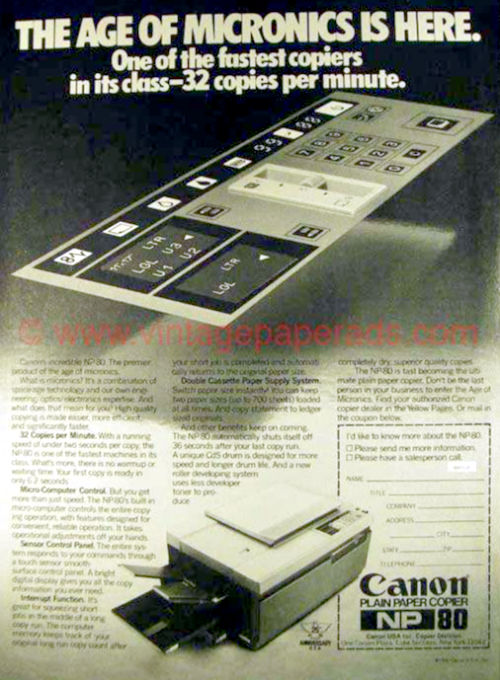
In 1984, I'd been a full-time service tech now for about 3 years and was just starting to get my sea legs under me.
The initial jitters about going out on a service call all by myself - providing a valuable enough service to charge for - had long since past and I was starting to develop--what I thought was--a pretty decent approach to the basic service call. I had become sort of the expert on the new microprocessor based machine we sold called the Canon NP-80.
Programming
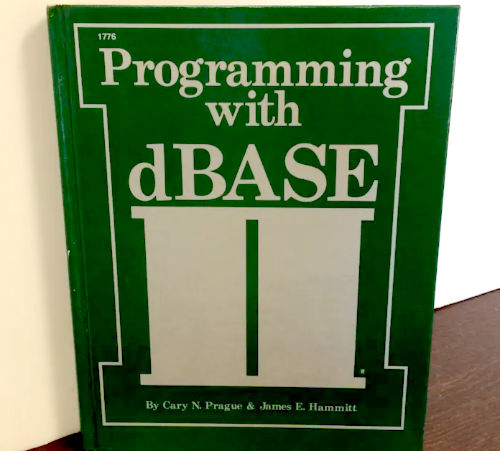
I'd taken a couple programming classes in college (Fortran and Basic) and it always interested me.
So I'd started playing around with a program called dBase II early on at EBM and building out a customer database that could--in the days of handwritten dispatch tickets-- print out a complete service ticket with all the necessary customer information neatly onboard. Seems like a no brainer now, but back then, that was not how it was done.
High Tech
I also became that guy at work that got handed all the new techy stuff. I guess since I wasn't intimidated by it the way some of the older techs were.
Later in the 80s when we started getting into the first IBM PCs and CP/M based DEC Rainbows along with computer based weight scale systems and all manner of document management systems -- well, I always seemed to be the first in line.
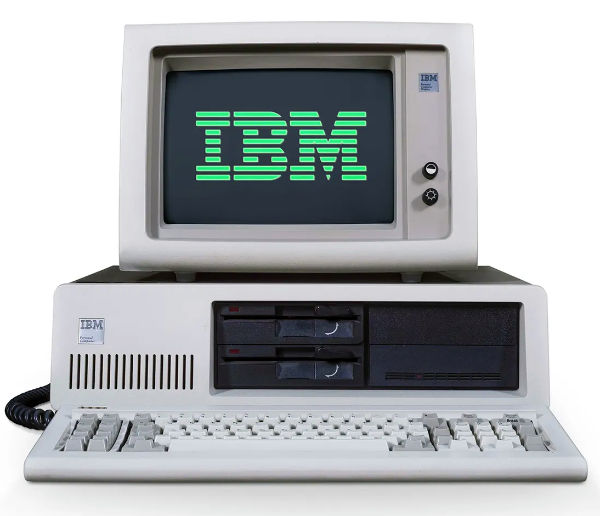
I jumped in head first when the first IBM PCs came out. We sold these and several versions of IBM Clones over the years.
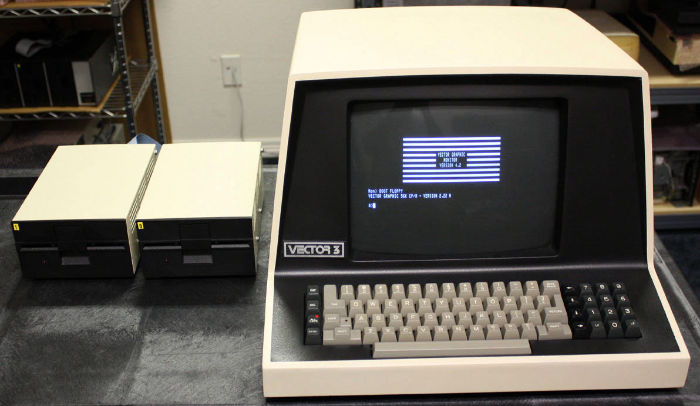
And even before the IBM PC took over the world, we were involved with other microcomputers based on the CP/M operating system. This was one that I worked on from a now deceased company called Vector Graphics.
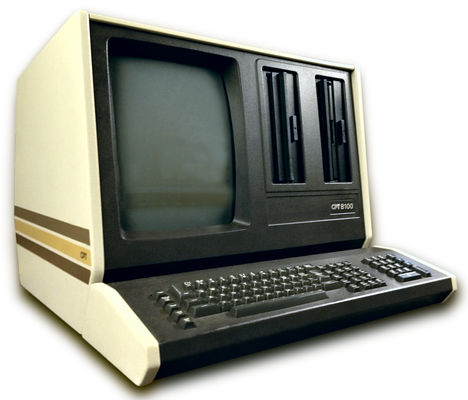
And then there were the odd and assorted mix of Word Processors that emerged at this time. One of the most interesting was from a company called CPT (that stood for Cassette Powered Typewriter - I shit you not).
The unit I first worked on had 2, 8" floppy drives (really) - one for the program disk and one for the user's data files. Wow.
Right-Brain
Attic Recording Studio
But during my evenings, the recording studio dream was coming along nicely.
So, after the initial construction in early 1984, Attic Recording Studios was officially open for business at the bargain basement price of $15 / hour.
Why "Attic"? It was basically a spur of the moment thought when I was framing out the studio in that dark dingy basement.
Who would come to a place called "The Basement Studios". It just didn't sound right. So I went with the polar opposite. Something uplifting and positive (I guess).
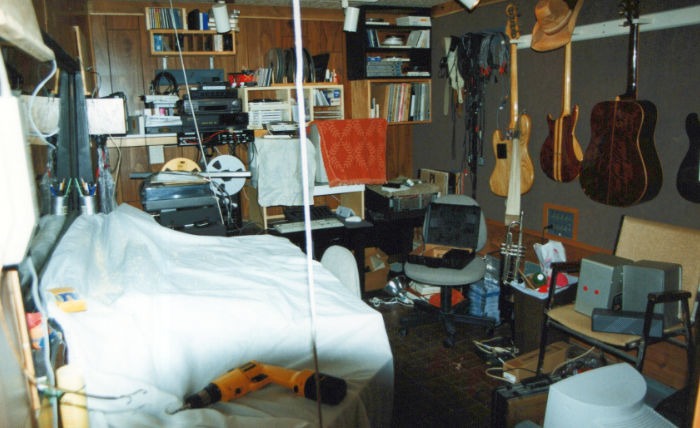
In those days, the studio was in a constant state of upgrading. Every last dime that came in, went back into some upgrade or another.
Me measuring, something once again.
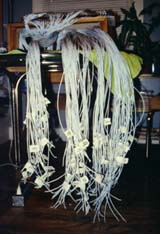
I ended up using a couple thousand feet of wire when it was all said and done. And God only knows how many hours I spent behind a hot soldering iron!
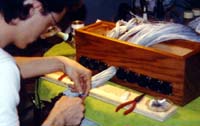
Another of the multiple patch bay upgrades. This time to up the total patch points to 288 and add Molex connectors on the bottom to aid in future reconfigurations.
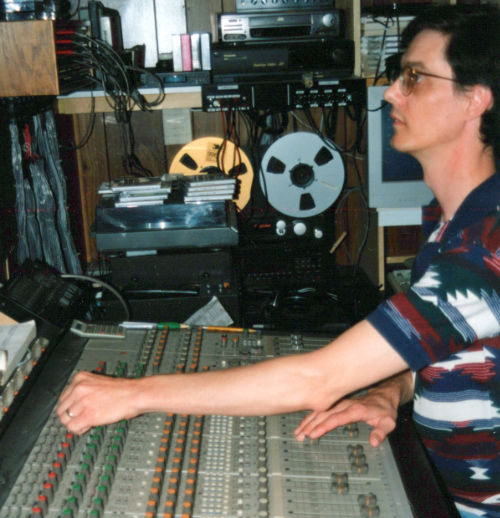
Eventually the homemade consoles gave way to a real, adult sized Tascam M-520, 20 x 8 mixing console.
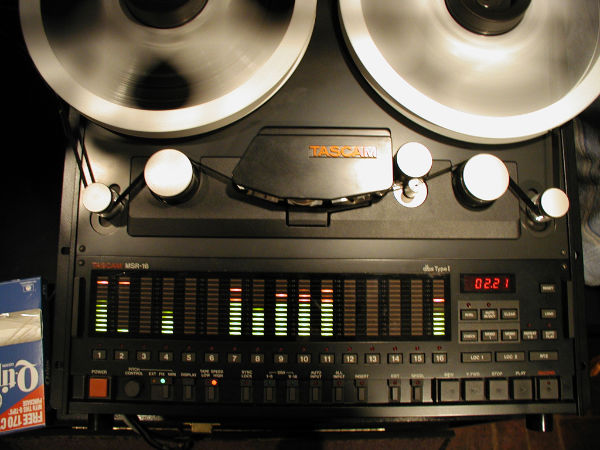
Combined with the new Tascam MSR-16, 16-track, the studio was now in the big time! (I'm not completely sure, but we may have been all the way up to $25 or $30 an hour at this point.)